
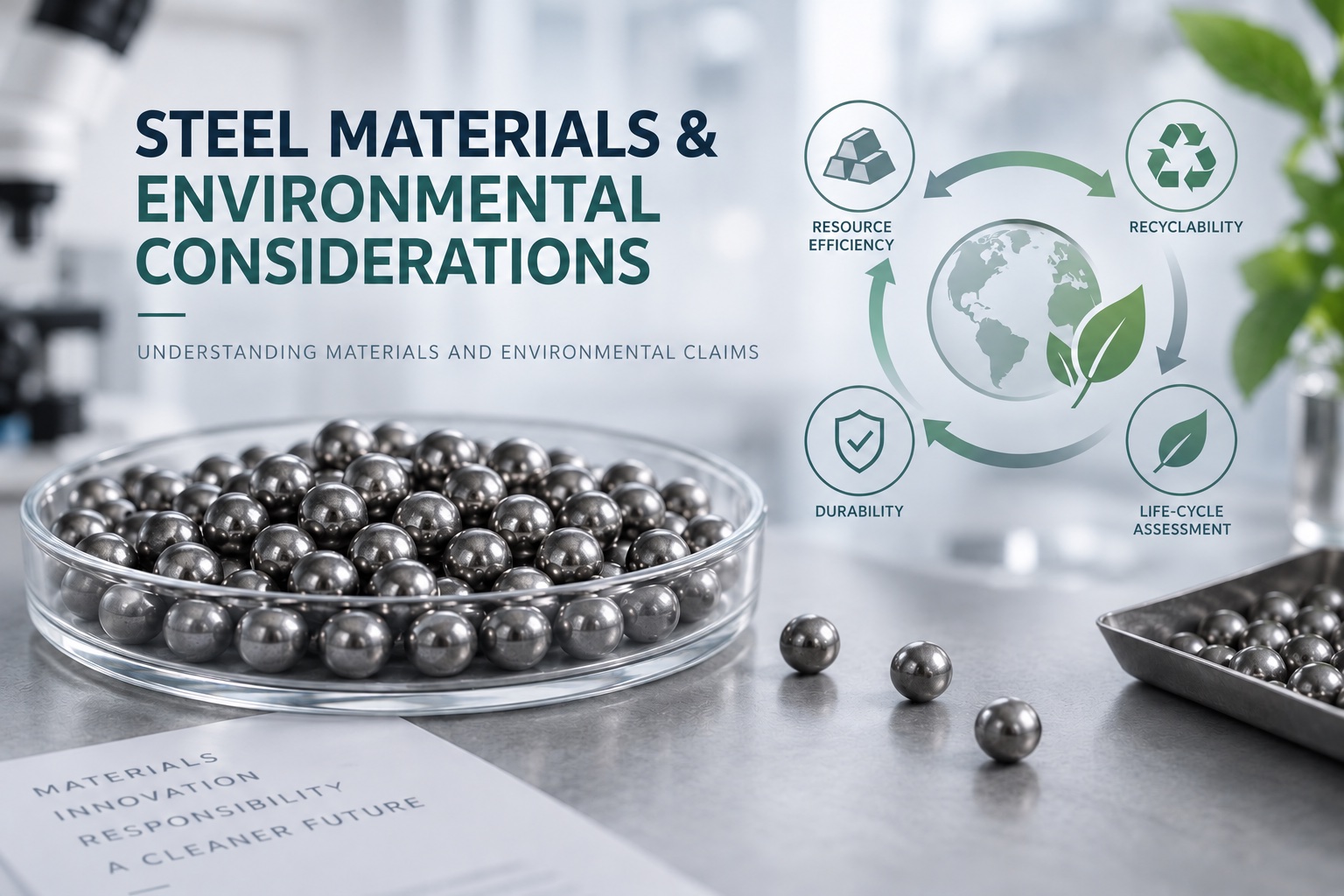
Discussions about alternatives to lead often bring together environmental concerns, material terminology and regulatory requirements. These subjects are connected, but they should not be treated as interchangeable.
A material description tells readers something about composition. It does not, by itself, establish environmental harmlessness, suitability for a particular use or approval in every market.
“Non-lead” and “non-lethal” mean different things
“Non-lead” refers to material composition. “Non-lethal” concerns an intended outcome of use. The two expressions are not synonyms and should never be substituted for one another.
“Lead-free” also needs context. A responsible claim should identify the material or component it covers and the declaration, test result or applicable standard supporting it. Readers should not assume that the phrase means the complete absence of lead at every possible detection level.
Environmental claims need a clearly defined scope
Choosing an alternative to lead is one part of a wider environmental assessment. It does not automatically establish that a product is harmless, fully recyclable or more sustainable throughout its life cycle.
A meaningful comparison should explain what is being assessed. Relevant considerations may include raw-material production, manufacturing, transport, service life, collection and end-of-life management. Conclusions should reflect the available evidence and its limitations.
Broad statements such as “environmentally friendly” are less informative than a specific, supported explanation of what has changed.
Read material declarations carefully
When reviewing a public material claim, useful questions include:
- Does the statement apply to the whole product or only one component?
- Is it based on a supplier declaration, testing or a defined standard?
- Does the supporting information identify its date and scope?
- Are limitations and uncertainties explained?
A material declaration and a product certification serve different purposes. Neither should be represented as broader approval than the supporting documentation actually provides.
Check the original source of regulatory information
Requirements can differ by location, product category and intended use. A statement about one market should not be presented as a universal rule.
For regulatory research, begin with the responsible public authority's current publications. Check the document's scope, publication date, effective date and any later amendments. A general article or supplier webpage should not replace the original source.
Communicate what the evidence supports
Clear communication separates composition, environmental assessment and regulatory status. Each claim should stand on its own evidence.
Using accurate terminology, explaining the scope of supporting documents and acknowledging uncertainty makes material information more useful—and helps readers avoid conclusions that the evidence does not support.
Sources and further reading
- Federal Trade Commission: Environmental Claims — Summary of the Green Guides, for context on qualified environmental claims and “free-of” terminology.
- U.S. Environmental Protection Agency: Life Cycle Assessment — Principles and Practice (2006), a methodological reference rather than a statement of current product approval.
Sources reviewed October 10, 2026. Consult the issuing authority for current requirements and updates.