Precision Balls · Steel Balls · One-Stop Sphere Solutions
info@sdballs.usWhatsApp +1 424 351 5470
EN
EN
REQUEST A QUOTE
MENU
HomeAbout Us
ProductsView Products
ApplicationsQualitySteel Shot & BBsContact
EN
WhatsAppREQUEST A QUOTE

WC-Co / WC-Ni CEMENTED CARBIDE

Tungsten Carbide Balls

Ultra-hard, high-density precision balls for severe wear, high-pressure valves, gauging and demanding industrial contact.

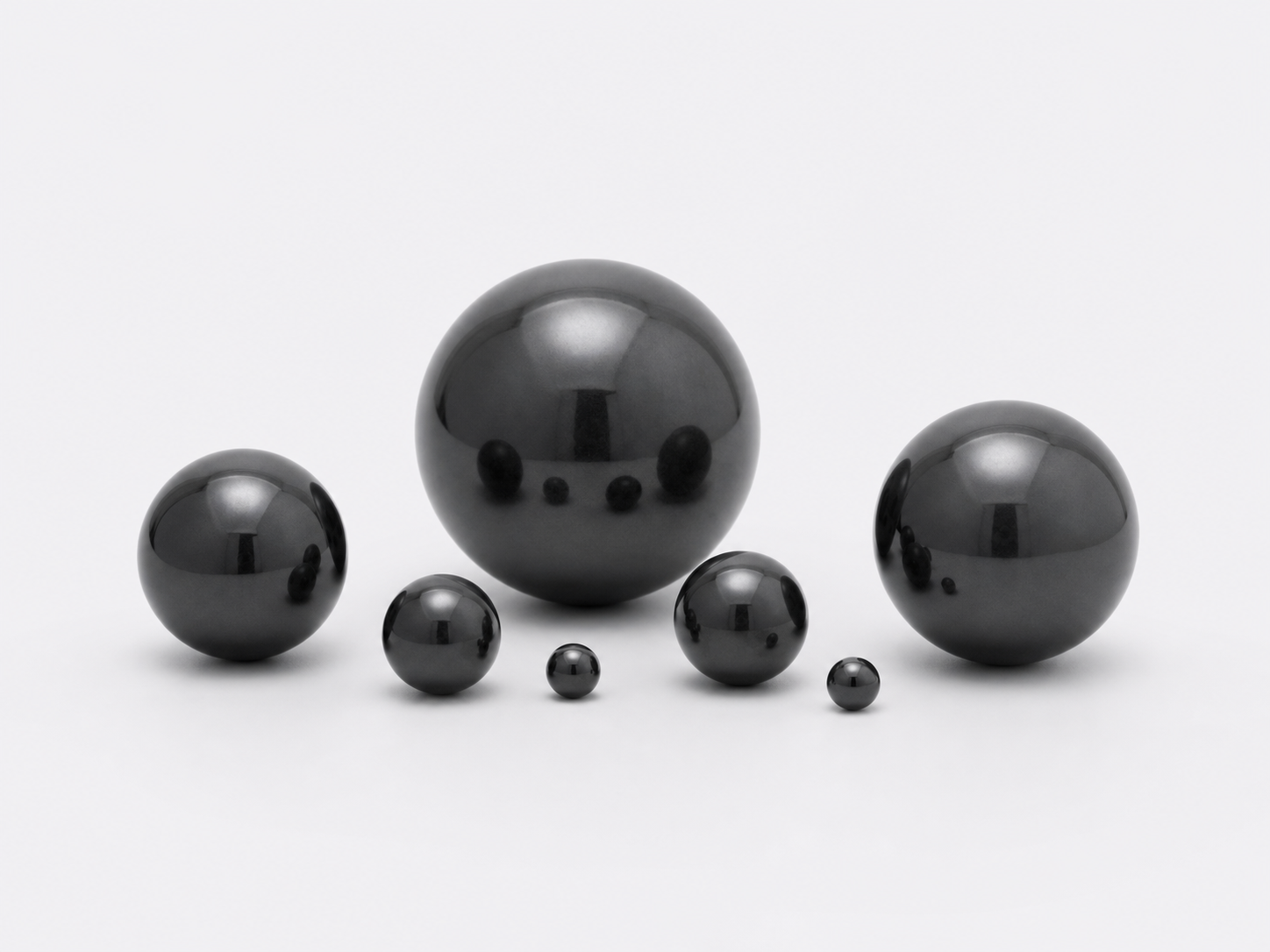
Polished tungsten carbide balls for high-pressure valves and severe-wear industrial applications
PRODUCT REFERENCE / FINAL SPECIFICATION BY QUOTATION

PRODUCT OVERVIEW

What are tungsten carbide balls?

Tungsten carbide balls are sintered cemented-carbide spheres made from tungsten carbide particles with a metallic binder, commonly cobalt or nickel. They combine extremely high hardness, density, compressive strength and wear resistance.

Performance varies significantly by carbide grain size, binder type and binder percentage. Buyers should specify the actual carbide grade or required hardness, density, corrosion behavior and application rather than using “tungsten carbide” as a complete specification.
TECHNICAL SPECIFICATIONS

Start with measurable requirements.

Values below are product-family references. The quotation, drawing, agreed standard and inspection plan control the final supply specification.

Technical itemReference specification
MaterialWC-Co or WC-Ni cemented carbide
Diameter Range1–120 mm; custom range subject to confirmation
Precision GradeG10–G100 typical project range
ToleranceControlled by the agreed precision grade, drawing or purchase specification
HardnessHRA 84–95, grade dependent
DensityApprox. 14.6–14.95 g/cm³
Surface FinishPrecision ground and polished
Roundness / SphericityControlled according to the agreed precision grade and inspection method
Temperature ResistanceApplication, load, atmosphere and material-grade dependent
Chemical ResistanceBinder and medium dependent; confirm chemical compatibility
PackagingBulk, small-quantity, container, bag, carton, export pallet or customized packing
Elastic modulusApprox. 600–650 GPa, grade dependent
MagnetismBinder-dependent magnetic response

PRODUCT SELECTION GUIDANCE

Compare materials before substituting.

Material selection affects load, wear, corrosion, temperature, precision, service life and total program cost.

Material optionPrimary advantageLimitationBest fit
WC-Co carbideExcellent toughness and wear performanceCobalt binder may be limited by certain corrosive mediaGauging, wear parts, mechanical contact
WC-Ni carbideImproved corrosion behavior in selected mediaGrade-specific mechanical tradeoffsValves and corrosion-sensitive severe wear
Hardened chrome steelLower cost, good precision and fatigue performanceLower hardness and abrasive-wear resistanceBearings and general precision motion
CeramicNon-magnetic, corrosion resistant and electrically insulating optionsDifferent impact toughness and densityChemical, electrical and high-speed systems

KEY PERFORMANCE FEATURES

Performance that purchasing teams can verify.

01

Extreme wear resistance

Very high hardness helps preserve geometry under abrasive and sliding contact.

02

High density

Substantially denser than steel, which is valuable in some metering and force applications but critical in dynamic design.

03

Low deformation

High elastic modulus supports dimensional stability under high compressive contact.

04

Grade-engineered performance

Binder system and carbide grade can be selected around toughness, corrosion and wear priorities.

TYPICAL APPLICATIONS

Specify the work the ball must perform.

Application names are starting points—not approval of universal suitability. Share the real medium, load, speed, pressure, temperature, life target and compliance needs.

Oil & gas valves

High-pressure valve balls and sealing elements where wear, pressure and media compatibility are confirmed.

Gauging & metrology

Reference spheres, probes and measurement components requiring durable geometry.

Flow meters & pumps

Dense wear elements for compatible fluids, pressures and seat materials.

Severe-wear assemblies

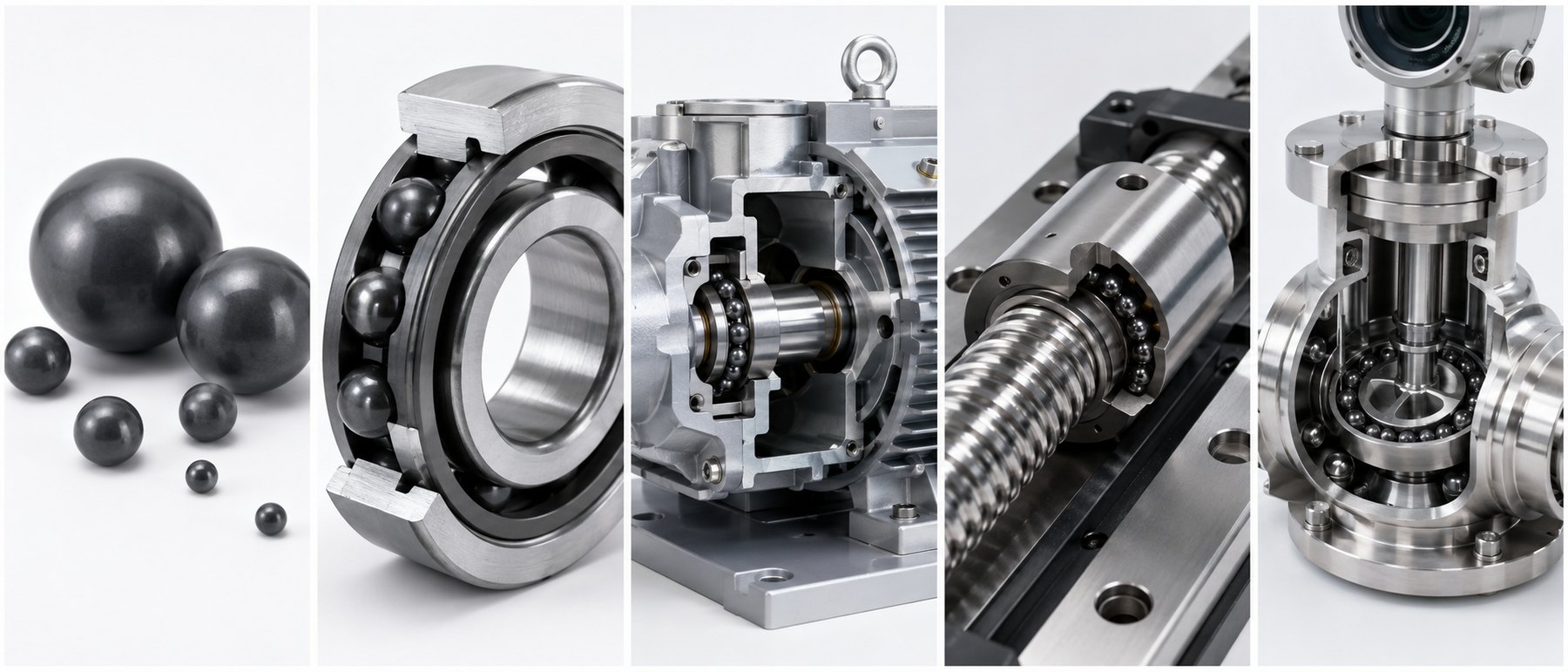
Ball screws, pens, grinding and industrial mechanisms exposed to abrasive contact.

Typical applications for Tungsten Carbide Balls
REPRESENTATIVE APPLICATION ENVIRONMENTS

QUALITY & DOCUMENTATION

Build the evidence into the purchase order.

Document requirements should be defined before quotation so the inspection method, sampling level, traceability and external testing can be planned correctly.

  • Material verification against the agreed grade or material specification
  • Dimension inspection for diameter and agreed tolerance
  • Hardness testing when applicable to the selected material
  • Surface finish inspection against the agreed visual or roughness requirement
  • Roundness / sphericity inspection for the specified precision level
  • Batch traceability through lot identification and controlled records
  • Material certificates available when agreed before quotation
  • Inspection reports, compliance documents and third-party testing by agreement

PACKAGING OPTIONS

Protect precision through delivery.

Final packing depends on material, diameter, surface sensitivity, order weight, storage time and destination.

01

Individual protective cells

Separated packing for polished, precision or larger carbide balls.

02

Small-lot containers

Labeled vials, trays or sealed bags for samples and qualification lots.

03

Bulk protected packing

Rigid containers with controlled movement and export cartons.

04

Customer-specific labeling

Grade, binder, size, lot and inspection status identified as agreed.

Supported formats: bulk packaging · small-quantity packaging · plastic containers · bags · cartons · export pallets · customized packaging.

SMALL QUANTITY & SAMPLE ORDERS

Validate before you scale.

SDBALLS Industry Corp. supports North American customers with sample quantities, prototype requirements, testing programs and specialty ball inquiries.

Small quantities and qualification samples are supported for engineering review. Because carbide performance is grade-specific, include the binder, hardness or density target, medium, pressure, contact material and inspection needs.

PrototypeTestingRepairR&DSmall batch production

PRODUCT FAQ

Answers for engineering and purchasing teams.

What is the difference between WC-Co and WC-Ni balls?

The binder changes toughness, magnetic response and corrosion behavior. WC-Co is widely used for wear performance; WC-Ni may be preferred for selected corrosive valve environments.

How hard are tungsten carbide balls?

Typical reference hardness is HRA 84–95, depending on carbide grade, grain size and binder content.

Are carbide balls corrosion proof?

No material should be described as universally corrosion proof. Compatibility depends on binder, fluid, concentration, temperature, pressure and exposure time.

Why is density important?

At roughly 14.6–14.95 g/cm³, carbide is much denser than steel. This affects inertia, impact energy, system balance, handling and shipping.

What should a valve buyer specify?

Provide fluid chemistry, pressure, temperature, seat material, leakage target, cycles, diameter, grade, surface finish and preferred carbide binder.

Can SDBALLS provide samples and inspection reports?

Yes. Sample quantities, dimensional reports, hardness or density confirmation and material documentation can be discussed before quotation.

CONTACT SDBALLS U.S.

Bring us the application and requirement.

Include product, material, size or shot size, grade, hardness, finish, quantity, packaging, application and required documentation for a faster quotation.

SDBALLS Industry Corp.Email: info@sdballs.usWhatsApp: +1 424 351 5470Website: www.sdballs.usNorth American Business Support
WAWhatsApp